

Selected among America’s Top Plastic Surgeons
by the Consumers’ Research Council of America.
Unleash Your Radiance with the Benefits of Facelift Surgery
Embrace the transformative power of facelift surgery. This procedure goes beyond simply reducing the signs of aging—it helps renew self-confidence, and revives your youthful vigor. A facelift grants a fresh, vibrant, and natural-looking appearance, ushering in a renewed zest for life.
Youthful Radiance
Deep Plane Facelift surgery rolls back the years, smoothing wrinkles and sagging skin to reclaim your youthful appearance.
Restored Confidence
By rejuvenating your look, a facelift can ignite a surge of renewed self-confidence and positivity.
Natural-looking Results
Skillfully executed, a facelift ensures results that blend seamlessly with your features, enhancing your natural beauty.


What is a Facelift?
Facelift or “rhytidectomy” is a surgical procedure that reduces the visible signs of aging in facial features. A board-certified facial plastic surgeon will develop a customized surgical plan to lift and reposition skin, restore youthful volume, and give patients a refreshed look. The results of facelifts are natural-looking and can help bring back a patient’s confidence.
Detailed Overview of Our Facelift Procedures
At our clinic, we specialize in a range of facelift techniques, each tailored to meet the unique needs of our patients. Here’s a closer look at our specialized procedures:
1. Customized Deep Plane Facelift:
- Technique: This advanced procedure involves careful manipulation of the SMAS layer (Superficial Muscular Aponeurotic System), which is key to achieving more natural and long-lasting results. By repositioning this layer, we address sagging skin, jowls, and mid-face drooping.
- Benefits: Patients experience a rejuvenated appearance that looks natural, not pulled or overly tight. This technique is particularly effective in restoring youthful contours and improving the jawline and neck area.
2. Short Scar Facelift:
- Technique: Ideal for patients with moderate signs of aging, this procedure involves smaller incisions, typically along the hairline and around the ears. It focuses on lifting the mid-face and lower face with minimal scarring.
- Benefits: This approach is less invasive, offering a quicker recovery time. It’s perfect for those seeking significant improvement without the downtime of a traditional facelift.
3. Mini Facelift:
- Technique: Targeting early signs of aging, the mini facelift tightens skin and smoothens wrinkles primarily in the lower face and neck. It involves minimal incisions and is often combined with non-surgical treatments for enhanced results.
- Benefits: With a focus on subtle changes, it offers a refreshed look, making it suitable for younger patients or those desiring minor adjustments.
Facelift and facial aging
UV rays from the sun, contaminants in your environment, genetics, stress, and gravity all take a toll on facial aging. Your skin loosens and begins to sag a little. Wrinkles begin to develop around your mouth and eyes due to constant muscle movement. Fat deposits start to move down towards your chin and neck. Over time, all these effects create an aged look on your face. Facelift surgery performed by Dr. Douglas Steinbrech, MD, FACS, can correct all these concerns by lifting and tightening the skin around the middle and lower half of your face.

Types of Facelift Options
Facelifts are one of the most sought-after cosmetic procedures to help individuals achieve a more youthful and refreshed appearance. This surgical procedure is designed to lift and tighten facial skin, tissue, and muscle to reduce sagging, wrinkles, and creases on the face. Facelifts can also be used to improve the shape of the jawline and neck area.
There are several different types of facelifts available today, depending on each individual’s needs and desires. Such as SMAS or Deep Plane facelifts Traditional facelifts involve making incisions around the ears and hairline in order to remove excess skin that has lost elasticity due to aging or sun exposure. After removing the loose skin, the plastic surgeon will reposition the facial tissue in order to give it a lifted appearance. A traditional facelift may also involve tightening connective tissue beneath the surface of your skin, which can help create a more youthful-looking face.
In addition to traditional facelifts, there are other variations, such as mini facelifts or neck lifts, that focus on specific areas of concern. Mini facelifts are often used for patients who only have mild signs of aging but want more dramatic results than dermal fillers can provide. Neck lifts target laxity in this area specifically by removing excess fat deposits and tightening underlying muscles for a smoother profile. Eyelid surgery is another option for those wanting to address sagginess or puffiness around their eyes, which may contribute to an aged look in this area.
No matter what type of facelift you decide on, it is important to consult with an experienced plastic surgeon like Dr. Douglas Steinbrech for an initial consultation prior to undergoing any surgical techniques or procedures. He can discuss all your options with you so that you make an informed decision about your facial rejuvenation plan that best suits your aesthetic goals while maintaining safe practices throughout the entire process.
-

- Real Patient







What Problems Can Facelift Surgery Fix?
Facelift surgery is a popular cosmetic procedure that can help patients achieve a more youthful facial appearance. It involves the meticulous reshaping of the facial structures and contours to create natural-looking, rejuvenated results. Facelifts should only be performed by board-certified plastic surgeons such as Dr. Douglas Steinbrech, who have extensive experience in this field. During a personal consultation, your plastic surgeon will assess your individual needs and develop a customized treatment plan that takes into account your unique facial anatomy and skin texture.
One of the primary benefits of facelift surgery is that it can effectively address sagging skin caused by aging or sun exposure. This procedure can also reduce the appearance of deep creases on your face, soften tissue around your mouth, and improve overall facial contours for a younger-looking appearance. In addition to these aesthetic benefits, facelift surgery can also help restore blood pressure levels in certain areas of the face which may have been compromised due to age or illness.
If you are considering traditional or mini facelift surgery as an option for improving your facial appearance, it is important to consult with an experienced and board-certified plastic surgeon who can review all available options with you so that you make an informed decision about your aesthetic goals while ensuring safe practices throughout the entire process.

SPECIALIST CARE YOU CAN TRUST
Dr. Steinbrech is supported by a brilliant team of caring staff members. You can trust the entire staff to help make your visit as comfortable and safe as possible! Learn more about Dr. Steinbrech and our Staff.
The Facelift Consultation in New York City
The first step in preparing for a facelift is to have an in-depth consultation with your plastic surgeon. During this appointment, your doctor will assess your facial anatomy and discuss the goals of the surgery as well as any potential risks or complications associated with the procedure. During the consultation, it’s important, to be honest and open about any medical history or current health conditions you may have so that your doctor can ensure that you’re a good candidate for a facelift. The consultation is also a great opportunity to ask any questions or concerns about the procedure so that you’re fully informed before making any decisions.
Our Commitment to Tailored Aesthetic Solutions
We understand that each patient’s needs are unique. During your consultation, we’ll discuss your aesthetic goals and recommend the best approach for you. Our commitment is to provide not just a procedure, but a personalized experience that leaves you feeling confident and rejuvenated on all steps of your facelift journey.
The Cost of a Facelift
The average cost of facelift surgery can vary depending on the type of facelift you choose to undergo and the expertise of your chosen facelift surgeon. Facelift surgery in New York generally costs between $30,000 and $40,000. Skin laxity and other factors will determine the type of facelift technique that is best suited for you, and this will also factor into the overall cost.
When considering a facelift surgery, it’s important to factor in all related costs such as hospital fees, anesthesia fees, post-surgery appointments with your chosen plastic surgeon, and any additional treatments or medications that may be necessary. The best way to ensure you get an accurate estimate is to consult with an experienced board-certified plastic surgeon who can discuss all available options and help you make an informed decision about your facial rejuvenation plan.
Deep Plane Facelift Risks
Facelift surgery can involve potential risks and complications such as scarring, pain, and infection. Scarring is a common risk of any facial surgery, and some patients may experience mild to moderate scarring after facelift surgery. It’s important to discuss this with your plastic surgeon prior to your procedure so that you understand what type of scarring you may expect.
To reduce the chances of scarring, it is important to follow all post-op instructions carefully including taking prescribed pain medication and avoiding activities that could cause further irritation or trauma to your incision sites. Additionally, proper care of the surgical site is essential in preventing infection which can also lead to more serious complications if not treated promptly. With a qualified New York plastic surgeon like Dr. Douglas Steinbrech, there are typically minimal risks associated with facelift surgery; however, it is still important to discuss any concerns with your doctor prior to undergoing treatment.
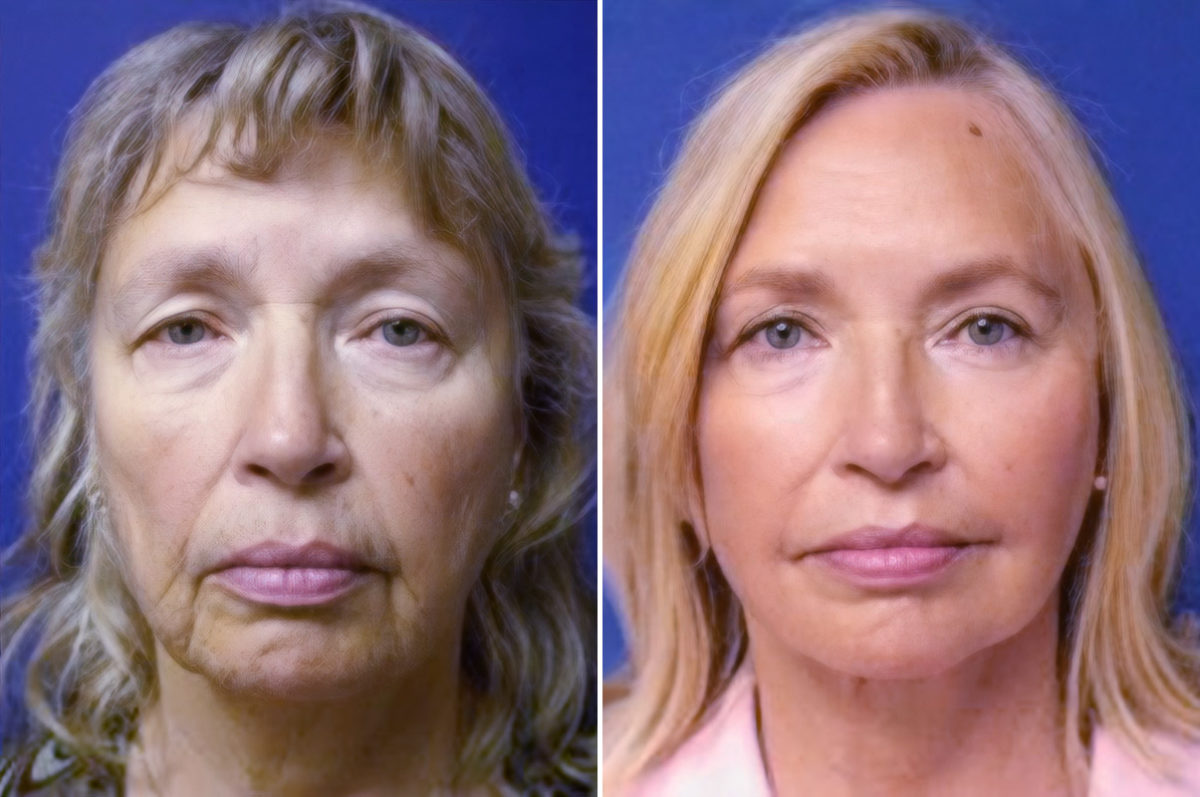
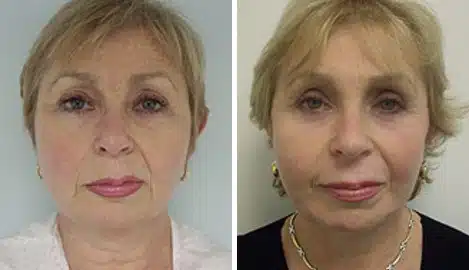
*Each patient is unique and individual results may vary.
How Does a Facelift Work?
The facelift procedure is designed to reduce the common signs of aging by restoring your skin’s elasticity and improving its overall quality. During this procedure, shorter incisions will be made behind the hairline or around the ears in order to access and reposition the deeper tissues beneath the skin’s surface. This helps to restore a more natural crease and contours while tightening and smoothing any laxity that may have occurred due to age or sun exposure. Excess tissue, such as fat deposits, may then be removed or redistributed using fat grafting techniques in order to create a more balanced facial structure while maintaining its natural position. Once all these procedures have been completed, the incisions will then be sutured together in order to help ensure optimal results.
Are You a Good Candidate for Facelift Surgery?
A good candidate for a facelift is typically someone in their 40s or older who has begun to experience sagging skin, deep creases, and/or lost facial volume. It is important to keep in mind that this procedure should only be performed by a board-certified plastic surgeon, and it is essential to disclose all your medical history in order to ensure that you’re an appropriate candidate for the procedure. The best approach is to have a personal consultation with your plastic surgeon, where they can assess your individual needs and develop a customized treatment plan based on your facial anatomy.

Complementary Procedures for Facelifts
While a facelift is a transformative procedure, achieving the best results often involves considering the entire facial aesthetic. To provide a more comprehensive rejuvenation, we offer a range of complementary procedures that can enhance and complete your transformation.
Eyelid Surgery (Blepharoplasty): This procedure addresses sagging or puffy eyelids to rejuvenate the eye area. When combined with a facelift, it can provide a more balanced and refreshed overall appearance. This combination is particularly effective in making the eyes look brighter and more youthful, complementing the improvements achieved through the facelift.
Brow Lift: A brow lift lifts and smooths the forehead area, reducing the appearance of deep furrows and drooping brows. This procedure complements a facelift by enhancing the upper face, creating a harmonious and youthful look from brow to chin. It’s an excellent option for those who wish to address aging signs in the upper face concurrently with a facelift.
Neck Lift: Specifically targeting loose skin and muscle banding in the neck, a neck lift provides a smoother, more defined neck and jawline. This procedure is ideal for patients experiencing aging signs in both the face and neck, ensuring a seamless transition between the rejuvenated face and neck areas.
Non-Surgical Enhancements: Our clinic also offers a variety of minimally invasive treatments, including dermal fillers, Botox, and laser skin resurfacing. These treatments can enhance the results of a facelift by addressing fine lines, wrinkles, and skin texture, providing a complete facial rejuvenation experience with less downtime.
Fat Transfer: This technique uses your own fat to add volume to areas like cheeks, temples, or lips. Fat transfer can restore lost volume, complementing the lifting effect of a facelift for a more natural, youthful appearance. It’s a great option for those looking to enhance facial contours in a natural and subtle way.
Recovery After Facelift Surgery
Facelift recovery typically takes a couple of days, although some patients may need up to a week before they are able to resume daily activities. During this time, it is important to follow the specific instructions provided by your facial plastic surgeon in order to ensure optimal results and avoid any potential complications. Common complications include bruising, swelling, and infection; however, these can be minimized with proper skin care and following the recovery instructions provided by your surgeon.
It is also important to avoid any strenuous activities during the initial recovery period, such as heavy lifting or exercise, as this can increase the amount of swelling in the area. After a few days, you should be able to gradually return back to normal activity levels while still being mindful of any discomfort that may arise. With proper care and attention following your facelift procedure, you should be able to enjoy natural-looking results from your surgery without any long-term side effects. The typical recovery time for a facelift will vary depending on each individual case, but on average most patients take around two weeks before they feel fully recovered.
WHY CHOOSE DR. STEINBRECH
- Dr. Douglas Steinbrech has been ranked in the top 10 plastic surgeons in NYC.
- Dr. Douglas Steinbrech is a Plastic Surgeon certified by the American Board of Plastic Surgeons under the American Board of Medical Specialties.
- Dr. Steinbrech underwent eight years of surgical training at New York University in General Surgery and Plastic Surgery and Reconstructive surgery.
- He has been awarded grants from the Howard Hughes Medical Institute and the Plastic Surgery Educational Foundation.

About Dr. Steinbrech: A Blend of Expertise and Artistry in Facelift Surgery
Philosophy and Approach
Believing in a holistic approach to facial rejuvenation, Dr. Steinbrech combines technical precision with an artistic eye. The philosophy is simple: to achieve natural-looking results that enhance and complement each patient’s individual beauty. This patient-centric approach ensures that every facelift is not just a procedure, but a transformation that aligns with the patient’s desires and expectations.
Commitment to Patient Care and Satisfaction
Dr. Steinbrech is dedicated to providing the highest standard of care, from the initial consultation to post-operative follow-up. Patient safety, comfort, and satisfaction are the cornerstones of our practice, ensuring that each patient’s journey is as rewarding as the results.