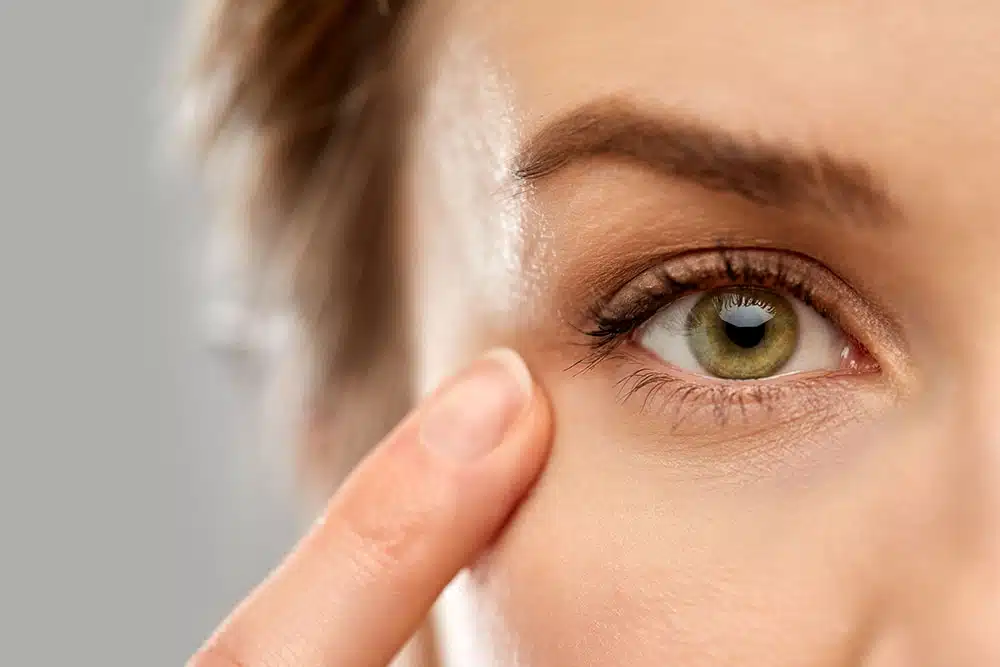
Blepharoplasty does leave scars because the procedure involves incisions, but in most cases those incisions are placed where they can be well hidden as they heal. Upper-eyelid incisions are usually made within the natural crease, while lower-eyelid incisions may be placed just below the lash line or, in some cases, inside the eyelid.
How noticeable the scars are can vary from person to person. Your skin, the surgical technique used, and the way you heal all play a role. In this article, we’ll walk through what blepharoplasty scars typically look like during recovery, how long they may take to fade, and what can influence the final result.
Key Takeaways
- Blepharoplasty scars are usually placed within natural eyelid creases or close to the lash line so they can become less noticeable as they heal.
- Lower blepharoplasty may use an incision inside the eyelid, which does not leave an external skin scar.
- Bruising often improves within the first couple of weeks, while scars can continue to mature for several months.
- Scar appearance varies depending on incision placement, healing, genetics, skin characteristics, and postoperative care.
- Any worsening redness, pain, swelling, drainage, or vision changes should be evaluated by your surgeon.
Understanding Blepharoplasty Scars
Often referred to as eyelid surgery, blepharoplasty is performed to improve the appearance of either the upper, lower, or both eyelids. Although blepharoplasty can improve the appearance of the eyelids, it is natural to have questions about scarring.
Blepharoplasty incisions are placed according to the area being treated and the surgical technique used. Upper-eyelid incisions are typically positioned within the natural crease, while lower-eyelid incisions may be placed just below the lash line or inside the lower eyelid. When an external incision is needed, careful placement can help the resulting scar blend more naturally as it heals.
Will Blepharoplasty Scars Be Visible?
How visible a blepharoplasty scar becomes depends on the incision location, surgical technique, and how your skin heals. Upper-eyelid incisions are typically placed within the natural crease, which helps make the scar less noticeable once it has healed. If you have a history of hypertrophic or raised scars, you should discuss this with your surgeon before surgery.
The Recovery Period and Scarring
Usually, the initial recovery from blepharoplasty takes days to weeks. Normal and temporary swelling, bruising, and discomfort could all arise right after the operation. Following your surgeon’s postoperative instructions can support proper healing and help reduce the risk of complications.
During the early stages of healing, the incision sites may appear red or more noticeable. Still, over time the scars usually fade and become less noticeable. The final appearance of the scars can take many months to a year to completely mature. It is important to have realistic expectations, since scar appearance and healing time can vary from person to person.
Blepharoplasty Bruising vs. Scarring
Bruising and scarring are both part of the healing process, but they are not the same thing. Bruising usually appears soon after surgery and gradually fades as swelling goes down. According to Mayo Clinic, bruising and swelling generally improve within about 10 to 14 days, while surgical scars may take months to fade.
Scars take longer to mature. Even after the bruising has resolved, the incision line may still look pink or slightly noticeable for several weeks or months before becoming softer and less visible.


Blepharoplasty Scar Healing Timeline
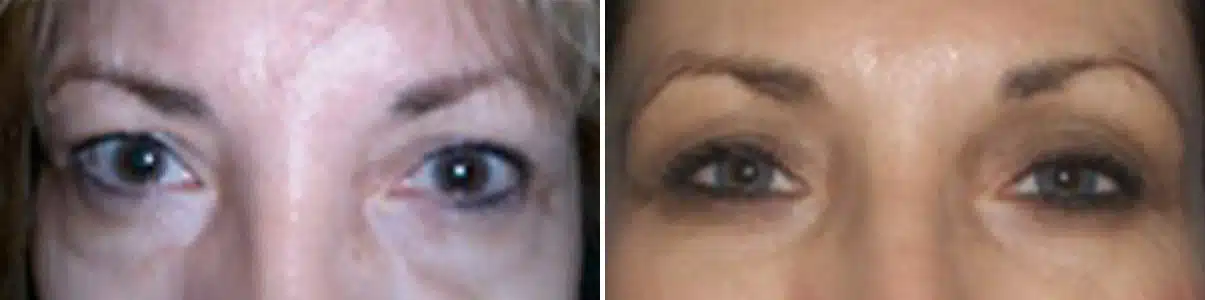
One of the most common questions patients have is how long blepharoplasty scars take to fade. Scars from blepharoplasty change gradually as the eyelids heal. Everyone recovers at a different pace, but the general timeline often looks like this:
- First few days: The incision may look red or swollen, and bruising is common.
- 1–2 weeks: Bruising and swelling usually begin to improve, although the incision line may still be noticeable.
- Several weeks to a few months: The scar often becomes flatter, softer, and less noticeable as healing continues.
- Several months and beyond: Scar tissue continues to mature and fade. According to the American Society of Plastic Surgeons, scar maturation can continue for six months to a year.
What Can Affect Blepharoplasty Scar Appearance?
The appearance of scars from blepharoplasty can vary from one person to another. Several factors can influence healing, including:
- Incision placement: Scars placed within the natural eyelid crease or close to the lash line are usually easier to conceal.
- Individual healing and genetics: Some people naturally form thicker, darker, or more noticeable scars than others.
- Skin characteristics: Skin thickness, tone, and elasticity can affect how a scar matures.
- Smoking: Smoking can interfere with blood flow and slow wound healing.
- Sun exposure: UV exposure can make a healing scar appear darker or more noticeable.
- Wound care: Following postoperative instructions and keeping the incision clean can support proper healing.
- Complications: Infection, delayed healing, or separation of the incision can affect the final appearance of a scar.
Types of Blepharoplasty Scars: Incision Placement and Techniques
Patients who are thinking about blepharoplasty should be aware of the different incision types and techniques used to reduce their visibility. The visibility of the scar can vary depending on the location and type of incision used in a blepharoplasty surgery.
Upper Blepharoplasty Scars
For upper blepharoplasty, the incision is usually placed within the natural crease of the upper eyelid. This helps keep the scar less noticeable when the eyes are open.
As the incision heals, the scar often becomes flatter, softer, and less visible over time. How noticeable it remains depends on factors such as skin characteristics, healing, and incision placement.
Lower Blepharoplasty Scars
Lower blepharoplasty scars can look different depending on where the incision is placed. A subciliary incision is made just below the lower lash line, which leaves a small external scar that usually becomes less noticeable as it heals.
Another option is a transconjunctival incision, which is made inside the lower eyelid. Because there is no external skin incision with this approach, it does not leave a visible scar on the outside of the eyelid.

SPECIALIST CARE YOU CAN TRUST
Dr. Steinbrech is supported by a brilliant team of caring staff members. You can trust the entire staff to help make your visit as comfortable and safe as possible! Learn more about Dr. Steinbrech and our Staff.
Potential Complications and How to Minimize Risk
Like any surgery, blepharoplasty carries potential risks. These can include:
- Bleeding or infection
- Dry or irritated eyes
- Difficulty closing the eyes completely
- Changes in lower-eyelid position, including ectropion or lid lag
- Asymmetry
- Delayed or poor wound healing
- Unfavorable scarring
- Temporary changes in vision
- Rarely, serious visual complications
The American Society of Plastic Surgeons lists these among the potential risks of eyelid surgery and notes that vision changes can rarely be permanent.
Patients should discuss their medical history, medications, eye conditions, and any previous problems with healing before surgery. Following the surgeon’s pre- and postoperative instructions can also help support a safer recovery.
When Should You Contact Your Surgeon?
Some redness, swelling, and tenderness are normal during the early stages of healing. However, you should contact your surgeon if the incision becomes increasingly red or painful, swelling suddenly worsens, or you notice drainage, bleeding that does not stop, or separation of the wound.
You should also seek prompt medical attention for new or worsening vision changes, severe eye pain, or rapidly increasing swelling around the eye.
How to Choose the Right Surgeon for Your Eyelid Surgery?
Choosing a qualified surgeon is an important part of planning blepharoplasty, especially if you are concerned about scarring. Look for a board-certified plastic surgeon with experience performing eyelid surgery who can explain where the incisions will be placed, how scars typically heal, what risks apply to your anatomy, and what results you can realistically expect.
Conclusion
Blepharoplasty scars are a normal part of healing, but in many cases they become less noticeable over time. Their final appearance depends on factors such as incision placement, surgical technique, and individual healing.
If you are considering blepharoplasty, it is important to discuss your goals, recovery expectations, medical history, and any concerns about scarring during your consultation. A personalized evaluation can help determine the most appropriate approach and give you a clearer idea of what to expect during recovery.
Frequently Asked Questions About Blepharoplasty Scars

ABOUT THE AUTHOR
Douglas S. Steinbrech, MD, FACS
New York Board-Certified Plastic Surgeon
Douglas S. Steinbrech, MD, FACS, is a board-certified plastic surgeon with more than two decades of experience in aesthetic plastic surgery. His practice includes surgical and minimally invasive procedures for the face and body, with an emphasis on individualized treatment planning, anatomical precision, patient safety, and natural-looking results.
Dr. Steinbrech’s credentials include:
- Medical Degree — University of Iowa College of Medicine
- General Surgery Training — New York University Medical Center
- Craniofacial Research Fellowship — Institute of Reconstructive Plastic Surgery at NYU
- Plastic & Reconstructive Surgery Residency — Institute of Reconstructive Plastic Surgery at NYU Medical Center
- Board Certification — American Board of Plastic Surgery
Expertise Areas:
Aesthetic Plastic Surgery, Facial Rejuvenation, Body Contouring, Minimally Invasive Aesthetic Treatments, and Surgical & Non-Surgical Cosmetic Procedures.