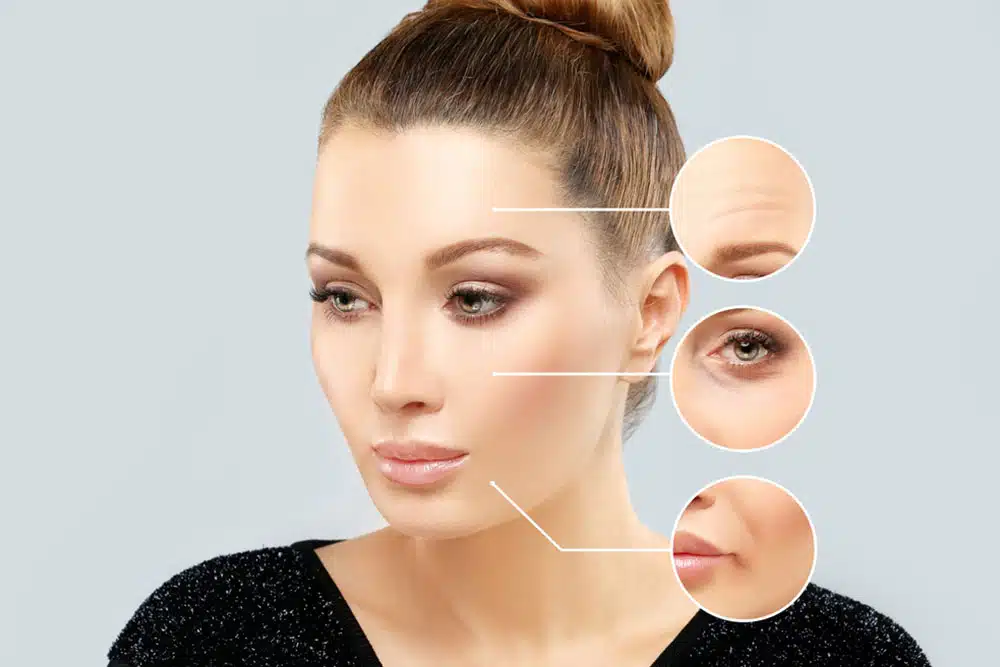
Botox is considered one of the safest and most effective cosmetic injectable treatments, but certain facial areas require greater precision because nearby muscles control blinking, smiling, swallowing, and facial symmetry. These “Botox danger zones” are not necessarily areas that should never be treated; rather, they are regions where anatomy, dosing, and injection technique are especially important. Improper placement can lead to temporary issues such as drooping eyelids, uneven facial movement, difficulty swallowing, or an unnatural appearance.
Understanding where Botox requires extra caution can help patients make informed decisions and recognize the importance of treatment by an experienced medical professional.
Key Takeaways: What Are the Botox Danger Zones?
Botox danger zones are facial and neck areas where injections require especially precise placement, dosing, and knowledge of the surrounding anatomy. They are not necessarily “no-go zones.” Several are routinely treated with BOTOX Cosmetic, while others involve off-label uses that may carry different risks.
| Area | Why Extra Caution Is Needed | Treatment Context |
|---|---|---|
| Glabella (between the eyebrows) | Unintended weakening of nearby muscles may contribute to eyelid drooping (ptosis) | FDA-approved treatment area |
| Forehead (frontalis) | Excessive or poorly positioned treatment can affect brow position and create heaviness or asymmetry | FDA-approved treatment area |
| Around the eyes | Nearby muscles help control eyelid movement, making precise placement important | FDA-approved for crow’s feet |
| Around the mouth and nose | Small changes in muscle activity can affect the smile, lip movement, speech, or drinking | Commonly treated off-label |
| Masseter (jaw) | Improper placement may affect nearby smile muscles or alter chewing function | Cosmetic use is off-label |
| Platysma bands (neck) | The neck contains muscles involved in movement and swallowing, so proper assessment and technique are important | FDA-approved treatment area |
The safest approach is not simply to avoid specific facial regions, but to have treatment performed by a qualified medical professional who understands facial anatomy, muscle function, appropriate dosing, and the differences between FDA-approved and off-label uses.
Can Botox Injections Be Dangerous?
Botulinum toxin injections are generally considered safe when performed by a qualified medical professional, but complications can occur if nearby muscles are unintentionally affected or if the toxin’s effects extend beyond the intended treatment area. Possible problems include eyelid or brow drooping, facial asymmetry, difficulty swallowing, vision changes, or muscle weakness. Careful dosing, placement, and knowledge of facial anatomy help reduce these risks.
Potential side effects can include localized swelling, bruising, or, in uncommon cases, allergic reactions. Most cosmetic side effects are temporary, but patients should understand both common reactions and the less common complications that may require medical attention.

Are There Botox No-Go Zones?
There are no universal “Botox no-go zones” that apply to every patient. For patients wondering where not to inject Botox, the more accurate answer is that entire facial regions are not always off-limits; instead, treatment depends on anatomy, nearby muscles, dosing, and the patient’s individual facial movement. Many areas commonly described as danger zones, including the forehead, glabella, crow’s feet, and platysma bands, are routinely treated when appropriate.
Certain areas require greater caution because nearby muscles control eyelid position, facial expression, speech, chewing, or swallowing. This is why treatment planning should be based on anatomy rather than simply avoiding an entire facial region.
How Facial Anatomy Affects Botox Safety
Botox works by reducing activity in targeted muscles, which means small differences in placement can affect nearby muscles with different functions. Around the eyes, mouth, forehead, jaw, and neck, neighboring muscles may control blinking, brow position, smiling, speech, chewing, or swallowing. Understanding these relationships is what makes facial anatomy especially important when treating Botox danger zones.
1. Between the Eyebrows (Glabellar Region)
The glabella is the go-to site for smoothing deep frown lines (often called the “11s”). However, this area contains delicate muscles like the corrugator supercilii. If botulinum toxin is injected improperly or diffuses too deeply, it can affect the levator palpebrae superioris muscle. This results in eyelid ptosis (a drooping eyelid), which can temporarily obstruct vision and create a tired appearance.
2. Around the Eyes (Orbicularis Oculi Muscle)
This muscle encircles the eye and is frequently targeted to reduce crow’s feet. Because the skin here is incredibly thin, it is a high-risk zone for incorrect dosing. If the effects extend to nearby muscles, patients may experience eyelid drooping, double vision (diplopia), or difficulty fully closing the eye (lagophthalmos).
3. The Nose Area (Nasalis Muscle)
The nasalis muscle is targeted to soften “bunny lines” on the bridge of the nose. The danger here lies in its proximity to the levator labii superioris alaeque nasi (LLSAN), the muscle responsible for elevating your upper lip. A misplaced injection in this danger zone can cause the Botox to drift downward, resulting in an asymmetric smile or a temporarily drooping upper lip.
4. Around the Mouth (Perioral Region)
The perioral region is often treated to soften smoker’s lines or perform a “lip flip.” This is a highly sensitive functional zone. If too many units are used or placed incorrectly in the orbicularis oris muscle, it can impair basic mouth functions. Patients may experience difficulty drinking from a straw, enunciating certain words, forming a natural smile, or even temporary drooling.
5. Forehead Lines (Frontalis Muscle)
The forehead is one of the most important Botox danger zones to understand because the frontalis muscle raises the eyebrows and helps maintain brow position.
Botox placed too low or used too aggressively can contribute to brow heaviness or brow ptosis, particularly in patients who rely on the forehead muscle to keep the brows elevated. Uneven treatment can also produce asymmetry or an exaggerated lateral brow arch sometimes called a “Spock brow.”
6. The Temporal Region
While the temporalis muscle is sometimes injected to relieve severe TMJ disorder or migraines, it is a danger zone for purely cosmetic injections. Over-treating this area can lead to muscle atrophy, which creates a hollowed, skeletal appearance at the temples, inadvertently aging the face rather than rejuvenating it.
7. The Jawline (Masseter Muscle) & Neck (Platysmal Bands)
Botox in the lower face is highly popular for jaw slimming (masseter Botox) and smoothing neck bands.
- Platysma Risk: In the neck, injecting too deeply into the platysma bands can affect the underlying muscles responsible for swallowing, leading to dysphagia (difficulty swallowing) or neck weakness.
- Masseter Risk: Injecting the masseter muscle incorrectly can affect the nearby risorius muscle, leading to a crooked smile or cause paradoxical bulging where the muscle visually protrudes when chewing.

SPECIALIST CARE YOU CAN TRUST
Dr. Steinbrech is supported by a brilliant team of caring staff members. You can trust the entire staff to help make your visit as comfortable and safe as possible! Learn more about Dr. Steinbrech and our Staff.
Possible Complications After Botox Injections
Botox can temporarily affect muscles near the treatment area, even when injections are performed appropriately. The type of complication depends on the area treated, the dose used, individual anatomy, and how the surrounding muscles respond.
Possible complications may include:
- Drooping eyelids or eyebrows (ptosis)
- Uneven eyebrow position or smile asymmetry
- Excessive brow heaviness or reduced facial movement
- Difficulty smiling, speaking clearly, or controlling lip movement
- Difficulty drinking or keeping liquids in the mouth
- Double or blurred vision
- Difficulty fully closing the eye
- Neck weakness
- Difficulty swallowing
Many localized effects are temporary and improve as the effects of botulinum toxin gradually diminish. However, certain symptoms require more immediate attention.
When to Seek Medical Attention After Botox
Seek immediate medical attention if you develop difficulty swallowing, speaking, or breathing after treatment. These symptoms can occur hours to weeks after injection and are specifically highlighted in the Botox prescribing information.
You should also contact a medical professional promptly for new or significant vision problems, including double vision, blurred vision, severe eyelid drooping, or difficulty closing an eye. The FDA lists these among reported adverse effects associated with cosmetic botulinum toxin injections.
Long-Term Effects of Regular Botox Use
Botox has been used cosmetically for many years and is generally well tolerated when appropriately administered. However, repeated treatment can produce longer-lasting changes in the muscles being treated, and some long-term effects are still being studied.
Muscle Atrophy and Weakening
Because Botox temporarily reduces muscle activity, repeated treatment may lead to decreased muscle volume or atrophy in frequently treated areas. Research has documented persistent changes in muscle structure and function after repeated botulinum toxin injections, although the long-term cosmetic significance of these changes is not fully understood. A review of long-term cosmetic botulinum toxin use found that available studies remain limited, particularly beyond several months of follow-up.
Reduced Treatment Response
Some patients may notice that Botox becomes less effective over time. This can have several causes, including treatment technique, dosing, injection intervals, product handling, and individual response. In uncommon cases, the immune system may develop neutralizing antibodies that reduce the effect of botulinum toxin. A recent review of secondary nonresponse discusses these potential contributing factors.
-

- Real Patient






How to Choose a Qualified Botox Provider
Choosing a qualified and experienced medical provider is an important part of safe Botox treatment. A careful assessment of facial anatomy, muscle movement, treatment goals, and medical history can help determine the most appropriate approach for each patient.
Dr. Steinbrech’s approach to Botox emphasizes conservative treatment tailored to each patient’s facial structure and muscle activity, with the goal of softening dynamic lines while maintaining natural facial expression.
Patients considering Botox can schedule a consultation to discuss their goals, treatment options, and whether Botox is appropriate for them. To schedule a consultation, call 646-949-0580 or visit our contact page.
Frequently Asked Questions About Botox Danger Zones

ABOUT THE AUTHOR
Douglas S. Steinbrech, MD, FACS
New York Board-Certified Plastic Surgeon
Douglas S. Steinbrech, MD, FACS, is a board-certified plastic surgeon with more than two decades of experience in aesthetic plastic surgery. His practice includes surgical and minimally invasive procedures for the face and body, with an emphasis on individualized treatment planning, anatomical precision, patient safety, and natural-looking results.
Dr. Steinbrech’s credentials include:
- Medical Degree — University of Iowa College of Medicine
- General Surgery Training — New York University Medical Center
- Craniofacial Research Fellowship — Institute of Reconstructive Plastic Surgery at NYU
- Plastic & Reconstructive Surgery Residency — Institute of Reconstructive Plastic Surgery at NYU Medical Center
- Board Certification — American Board of Plastic Surgery
Expertise Areas:
Aesthetic Plastic Surgery, Facial Rejuvenation, Body Contouring, Minimally Invasive Aesthetic Treatments, and Surgical & Non-Surgical Cosmetic Procedures.