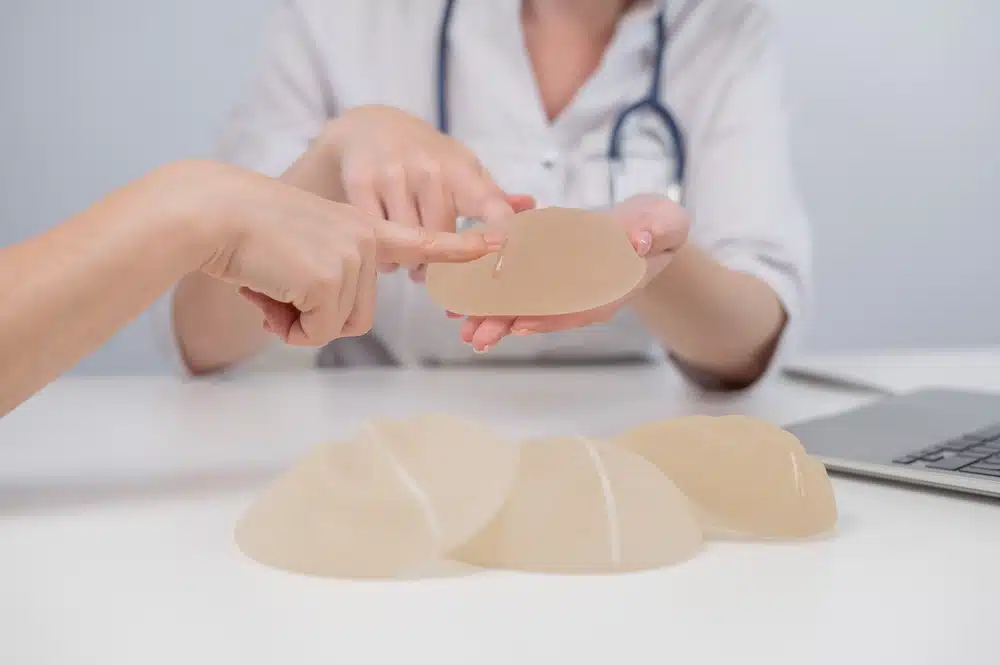
Deciding between 650cc vs 700cc breast implants is often a choice between achieving a full D cup profile or pushing into a bolder DD or E cup look. While the volume difference might seem small on paper, it changes your silhouette significantly depending on your chest width and frame.
We’ll break down how these large-volume sizes translate to real-world cup sizes, proportions, and long-term comfort so you can choose the look that truly fits your body goals.
650cc vs 700cc Implants: What’s the Real Difference?
When comparing 650cc vs 700cc implants, the most obvious difference is volume: 700cc holds about 50cc more than 650cc. In practical terms, that translates to slightly more projection and upper-pole fullness with 700cc, and a slightly softer, more balanced silhouette with 650cc.
In many patients, 650cc implants create a noticeable “full” look without overwhelming the natural chest width. By contrast, 700cc implants often read as a bolder enhancement with deeper cleavage and a stronger profile. Which volume looks better depends on your base width, soft-tissue coverage, and aesthetic goals.
In the broader implant size spectrum, both 650cc and 700cc are considered large breast implants, often compared with 600cc for a slightly softer look or 800cc for a more dramatic result.
Factors to Consider When Choosing the Right Implant Size
The “right” cc isn’t a trophy number; it’s the one that fits your body so the result looks effortless. We’ll use your measurements and lifestyle to guide the choice, but two basics matter most: your frame (base width and soft‑tissue coverage) and your overall proportions (height, weight, silhouette). Let’s look at the frame first, then fine‑tune with proportionality.
Body Frame and Implant Volume
Your frame sets the safe and aesthetic size range. When we evaluate implant volume, we focus on:
- Base width (the natural footprint of your breast on the chest wall).
- Soft-tissue coverage, including skin thickness and existing breast tissue.
- Chest width, which determines how much volume can sit naturally without side spill.
- Skin quality, since thinner skin may require profile or pocket adjustments.
A wider chest can usually support 700cc implants without looking crowded, while a narrower frame often looks more balanced with 650cc implants that stay within the natural footprint. Our goal is to match implant size to your chest architecture first, then refine for your aesthetic goals.
Weight, Height, and Proportionality
Overall body proportions influence how large implants actually look. When we assess proportionality, we consider:
- Height, which affects how projection and volume are distributed visually
- Body weight and fat distribution, which can soften edges and improve blending
- Torso length, impacting where fullness sits on the chest
- Shoulder and hip width, which affects overall balance in clothing and photos
On a petite frame, 700cc implants can appear very full and dramatic, while on a taller or broader build, they may look proportionate. That’s why we often compare 650cc vs 700cc using sizers or 3D imaging, so you see the difference on your body, not a chart.
Aesthetic Goals with 650cc and 700cc Implants
Now that your size range makes sense, it’s time to talk style—the look you want every day. Upper‑pole fullness, cleavage, side profile in fitted tops, and how you photograph all come into play. cc doesn’t equal cup size one‑to‑one; shape and profile matter, too. Here’s how 650cc vs 700cc implants typically read in real life, so you can picture the vibe before you try sizers.
What Do 650cc Breast Implants Look Like?
650cc often lands the “full but balanced” sweet spot. Expect a smooth upper‑pole slope with roundness that stays inside your natural chest footprint, so curves look intentional—not crowded. In tees and sports bras, it reads curvy; in evening wear, profile and placement can dial in more cleavage without overhang. On narrower frames, 650cc tends to keep proportions comfortable; on broader frames, it still looks full, especially with a higher profile. With a touch less width and weight than 700cc, many patients find movement natural and wardrobe fit easier. If you want a visible upgrade with a softer vibe, 650cc is a strong contender.
What Do 700cc Breast Implants Look Like?
700cc turns the volume up—more projection, fuller upper pole, and a stronger, “photo‑ready” presence. Expect deeper cleavage and a rounder look in fitted tops and swimwear. On wider chests, 700cc can look proportionate; on narrower frames, it may feel top‑heavy if base width or tissue support is limited. Because it’s a bit heavier and wider than 650cc, pocket design and support (profile choice, submuscular coverage, or an internal bra when indicated) matter to keep edges smooth and implants centered. If you love extra presence and don’t mind a little more weight, 700cc delivers.
What Type of Breast Implant is Best?
Choosing the right implant type starts with understanding how silicone and saline implants behave in your body. Each option offers a distinct feel, projection, and maintenance profiles, and certain anatomies respond better to different types. The following overview sets the stage, so you can weigh, look, longevity and lifestyle with your surgeon before zeroing in on size.
Silicone Gel Implants
Silicone gel implants are the go‑to if you want that soft, “feels‑like‑me” result. The gel moves more like natural tissue, so the upper pole looks smooth, and rippling is less common—especially if your own tissue is on the thinner side. Because they’re prefilled, the incision is usually a touch longer than with saline.
Modern cohesive gels (often called “gummy bear”) hold their shape even if damaged, but ruptures aren’t always obvious, so your surgeon may recommend occasional MRI or ultrasound check‑ins. If a realistic look and feel tops your wish list, silicone is often the crowd favorite.
Saline Breast Implants
Saline implants use a silicone shell that’s filled with sterile saltwater after placement. That allows a smaller incision and on‑the‑spot fine‑tuning for symmetry. They usually feel a bit firmer than silicone and can show more rippling, especially if you’re very lean or choosing larger volumes. A leak typically causes a noticeable deflation, and the saline is safely absorbed, so issues are obvious without routine MRIs.
Many patients like saline for the adjustability, smaller incision, and peace‑of‑mind factor. The trade‑offs? Slightly less “tissue‑like” feel in some cases and greater need for good soft‑tissue coverage or a submuscular pocket.
If you’re active, prefer a straightforward monitoring plan, or want flexibility in the OR, saline can be a smart fit—just weigh the pros and cons with your surgeon against your look and lifestyle goals.
-

- Real Patient






Long-Term Considerations and Maintenance
Great results should age well. Implants aren’t “set‑and‑forget”—they need smart support and occasional check‑ins to keep their shape. Think well‑fitted bras, posture/core strength, and routine follow‑ups (with imaging for silicone when advised). Size matters here, too: 650cc is a touch lighter; 700cc adds volume and weight, so support and pocket control matter more. Here’s what long‑term care usually looks like with each—then we’ll move on to risks and how we minimize them.
Durability and Maintenance of 650cc Implants
At 650cc, you’re carrying a bit less width and weight than with larger implants, which often makes maintenance easier for many frames. Long-term care typically includes:
- Wearing well-fitted everyday bras for daily support
- Using supportive sports bras to limit bounce during exercise
- Maintaining good posture and core strength to reduce back strain
- Attending routine follow-ups (MRI or ultrasound for silicone when recommended)
- Monitoring for subtle changes such as minor asymmetry, edge visibility, or position shifts
With stable weight and proper scar care, 650cc implants tend to age predictably and maintain their shape well over time.
Durability and Maintenance of 700cc Implants
With 700cc implants, the added volume places more demand on the surrounding tissues, making consistent support essential. Long-term care usually focuses on:
- Daily use of well-fitted bras to support added weight
- High-impact sports bras during workouts to minimize tissue stress
- Paying close attention to posture and back/core strength
- Keeping up with routine surgical follow-ups and imaging when advised
- Watching for early signs of lowering, outward movement, edge visibility, or softness changes
When support strategies are followed consistently, 700cc implants can remain lifted, smooth, and visually stable for years.
How Much Do 650cc and 700cc Implants Weigh?
A single 650cc breast implant weighs approximately 1.45 lb (0.66 kg), while a 700cc implant weighs about 1.6 lb (0.73 kg). Although the difference is small, the added weight of 700cc implants can place more stress on breast tissue over time, making proper support and surgical planning especially important.
How 650cc and 700cc Compare to Other Large Breast Implant Sizes
Within the large breast implant range, 650cc and 700cc sit between a softer 600cc option and a more dramatic 800cc implant size. Patients choosing 600cc often want slightly less projection, while 800cc implants deliver maximum volume with greater demands on tissue support. Compared to both, 650cc and 700cc implants offer substantial fullness while remaining more proportionate and manageable long term.
Potential Risks and Complications
No surgery is completely risk‑free, but smart planning, precise technique, and regular follow‑ups keep issues uncommon and fixable. Most concerns fall into three buckets: healing (scars, infection, temporary changes in nipple sensation), implant‑related changes (capsular contracture, rupture/deflation), and position shifts (bottoming out or lateral drift). Your anatomy, activity level, and implant size influence the likelihood. Below, we outline what to know with 650cc vs 700cc—and how we minimize each.
Potential Risks of 650cc Implants
Most 650cc patients experience routine healing—temporary soreness, swelling, and bruising—before things settle. Less common but possible: changes in nipple sensation (often temporary), thicker scarring, infection, or hematoma. Implant‑related issues include capsular contracture (tightening around the implant), rupture/deflation (saline deflates visibly; silicone can be a “silent” rupture), and visible rippling if tissue is thin. Because 650cc places a moderate load on tissues, position shifts like bottoming out or lateral drift are less likely than with larger volumes, but they can still happen on narrow frames or with limited support. Smart sizing, precise pocket design, and consistent external support keep risks low—and early check‑ins catch small changes fast.
Potential Risks of 700cc Implants
All general surgical risks apply—temporary soreness/swelling, possible changes in nipple sensation, scarring, infection, or hematoma (uncommon). With 700cc, added width and weight can place more stress on tissues over time, raising the chance of lower‑pole descent (“bottoming out”), lateral drift, or symmastia if base width is exceeded or support is limited. Thin tissues may show edges/rippling more. Implant‑related issues include capsular contracture and rupture/deflation (saline deflates visibly; silicone rupture can be “silent,” so periodic imaging may be advised). Larger volumes may also increase the likelihood of a future lift or pocket revision, especially after pregnancy or weight changes. Smart sizing, precise pocket control, and consistent bra support help minimize risks.


Who Should Perform My Breast Augmentation Procedure?
Choosing wisely matters. Results—and safety—hinge on the skill of your plastic surgeon. Large‑volume choices like 650cc or 700cc require precise planning of the implant pocket, soft‑tissue support, and symmetry across breast procedures. An experienced surgeon considers tissue quality, measurements, and future needs, including revisions and breast lifts, to deliver proportion, softness, and longevity.
Dr. Douglas Steinbrech is an ABMS board‑certified plastic surgeon who specializes in Minimally Invasive Aesthetics. Trained at the prestigious NYU Institute of Plastic and Reconstructive Surgery, he’s been recognized among America’s Top Plastic Surgeons and has authored numerous peer‑reviewed publications. If you’re exploring 650cc vs 700cc implants, you’re in expert hands—call 646-949-0580 or visit our contact page to schedule a consultation.